After graduating I assumed I'd go into pharmacy, or help run my father's surgical business. Instead I ended up in business development, working closely with JITO — one of the largest business foundations in the Jain community — and eventually serving as National Convenor of JIIF, its incubation and innovation initiative, across more than 80 chapters.
That work put me in front of hundreds of founders, creators and business owners every month. And I kept seeing the same thing.
What was broken
Networking, as most events practise it, is built for volume. The measure of success is how many people came, how many cards changed hands, how many logos were on the banner. None of that is what a founder actually needs.
A founder needs one specific person: the engineer who'll co-found, the first enterprise client, the operator who solved this problem last year. In a hall of three hundred, the odds of finding that person are close to zero — and the format actively works against it. Everyone is pitching. Nobody is listening for the ask.
The problem wasn't that people didn't want to help each other. It was that the room made it impossible.
What we do instead
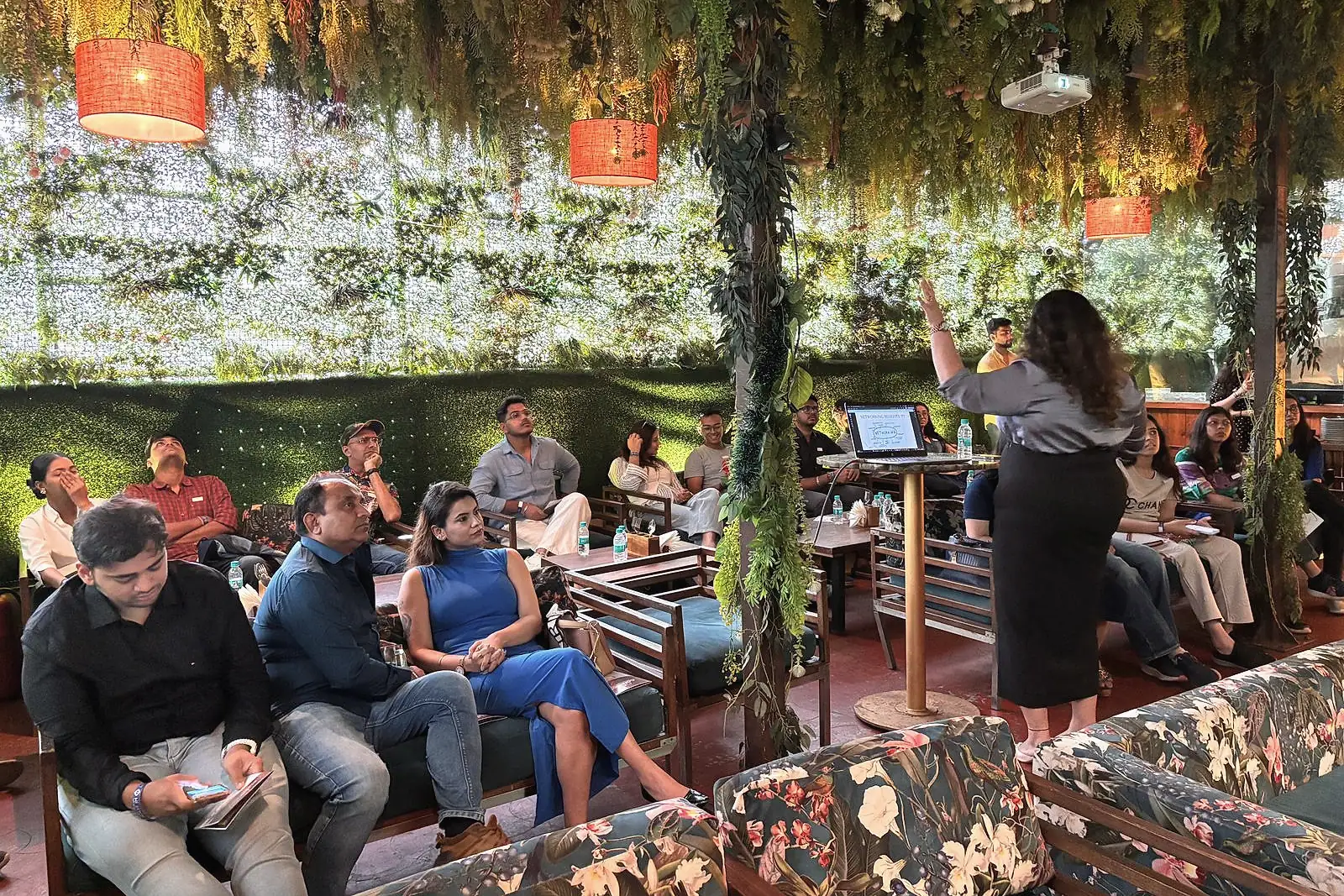
Bombay Networking Circle started in Mumbai in 2025 with a few deliberate choices. Keep rooms small. Group people by stage, so a first-time founder isn't lost among people three years ahead. Put a host in the room whose job is introductions. And ask everyone to say, in one line, what they need.
That last part changes everything. Once an ask is said out loud, the room starts working for you. The host connects you to someone. Someone else says “I know exactly who you should talk to.” The evening ends with introductions instead of business cards.